Pest Control Service Glen Burnie begins with a diagnosis rather than a spray: identify the insect or rodent by species, find where it is entering, then decide what treatment — if any — the property actually needs. Zorvex provides pest control service in Glen Burnie, Maryland, working Harundale, Ferndale, Furnace Branch, Marley Neck and the rest of Anne Arundel County for homeowners, landlords and small-property managers.
No forms — call now for a fast, no-pressure quote.
📞 Call (667) 405-1493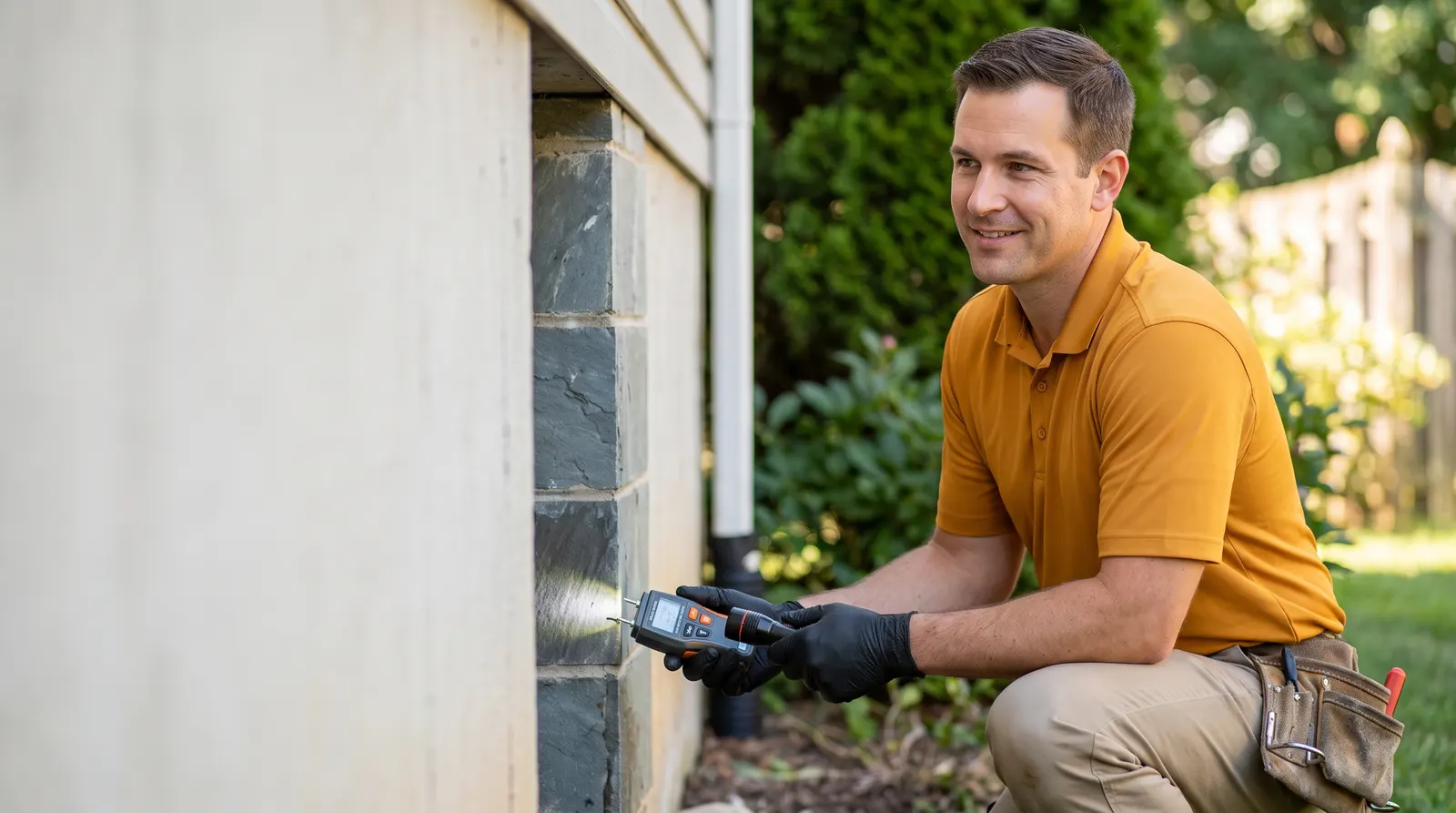
Pest control service in Glen Burnie is the inspection, pest identification, targeted treatment and physical exclusion work that removes insects and rodents from a house, rental or small commercial property in Anne Arundel County and seals the entry points that let them in.
Every service reflects the same meticulous attention to detail — whether it's a single job or a larger pest control service project across Glen Burnie.
Eastern subterranean termites are the species that matters in Anne Arundel County, and they announce themselves two ways: pencil-thin mud tubes running up a foundation wall or basement joist, and a spring swarm of dark winged insects that shed piles of equal-length wings on a windowsill. The inspection covers the sill plate, band joist, crawlspace piers, garage slab edge, exterior grade lines and any wood-to-soil contact — mulch piled over siding, deck posts set in dirt, a porch step buried at the base. Treatment is either a liquid termiticide zone trenched and applied around the foundation or an in-ground bait system where slabs, patios and additions block trenching. We also tell you what to fix for free: pull the mulch back three inches from the siding, extend the downspouts, and get the firewood off the ground away from the house.
View details →
German cockroaches are small, tan, fast, and they live in the kitchen and bathroom — inside the motor housing of the dishwasher, under the sink, behind the fridge, in the hinge of a cabinet door. They are not the same insect as the large dark American cockroach that comes up a floor drain or the outdoor Oriental cockroach in a damp Glen Burnie basement, and the treatment is different for each, which is why identification comes first. German cockroach work uses gel bait placed in the harborages plus crack-and-crevice application, not a fogger — foggers scatter a population through shared walls, which is exactly how a single unit in a rental building becomes three. Expect a follow-up visit about two weeks out to catch the newly hatched nymphs, and expect us to ask you to empty two cabinets before we arrive.
View details →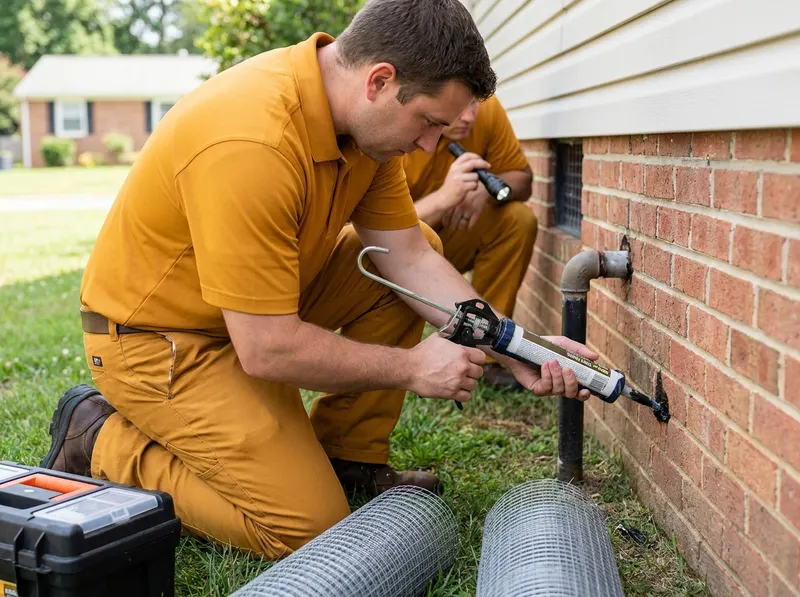
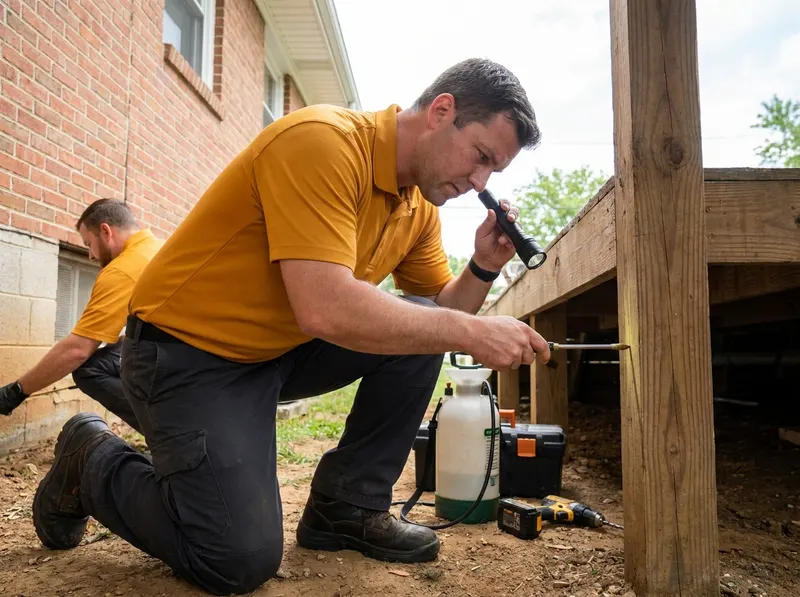
Norway rats work sheds, alleys, dumpster pads and burrows along the Baltimore–Annapolis corridor; house mice press indoors each October when night temperatures drop. The service starts with an entry-point survey — a mouse needs a gap the width of a pencil, and the usual suspects in Glen Burnie housing are garage door bottom corners, dryer and bath vent flaps, gaps where the AC line set enters, unscreened crawlspace vents and the void behind a kitchen soffit. Trapping removes what is inside; sealing with steel wool, hardware cloth, copper mesh and sealant is the part that keeps next year quiet. Interior droppings, a chewed cereal box, or scratching in the ceiling at 2am all warrant an inspection before bait goes anywhere near a house with a dog or a toddler.
View details →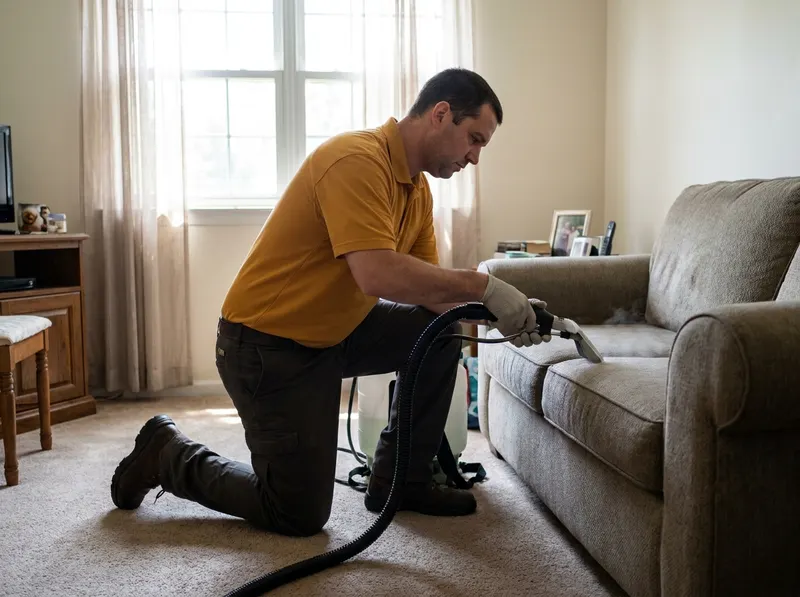
Bed bugs are found at the seam of the mattress, the underside of the box spring frame, the headboard bolt holes and the piping of an upholstered chair — small rusty smears on the sheet and dark specks along a seam are the usual first evidence. Bites alone are not a diagnosis, because most bite complaints we inspect turn out to be something else , so we confirm the insect visually before quoting treatment. Treatment is room-by-room and preparation-heavy: laundering on high heat, bagging, and pulling the bed away from the wall so the frame, rails and baseboards can be treated properly. Plan on two to three visits spaced roughly two weeks apart, and expect a written prep list before the first one.
View details →
Mosquito pressure in the tidal neighborhoods around Marley Creek, Sawmill Creek Park and Furnace Branch comes from standing water measured in tablespoons, not ponds — a gutter holding leaves, a tarp fold, a kiddie pool, a corrugated extension pipe, an upturned lid under the deck. The program treats the shaded resting harborage where adults sit out the day: the underside of leaves, ivy, dense shrub lines, fence bases and deck skirting. It also includes pointing out and, where practical, correcting the water sources on your own property, because a treated yard with a full birdbath in it stays buggy. Tick work focuses on the yard edge where lawn meets woods or ivy, which is where dogs and kids pick them up along the Baltimore & Annapolis Trail side of town. April is the month to book for May-through-September coverage; these slots sell out earliest.
View details →
Ant calls in Glen Burnie spike April through June as soil warms, and the species decides the plan. Odorous house ants trailing along a countertop take non-repellent bait so the workers carry it back; carpenter ants — large, black, often with coarse sawdust-like frass below a hole — mean moisture-damaged wood somewhere, usually a leaking window header, a wet band joist or a deck ledger. Pavement ants coming up through a slab crack near a Ritchie Highway-area patio are a different treatment again. Spraying a visible trail with a repellent from the hardware store scatters the colony into new satellites, which is the most common reason ants come back worse two weeks later.
View details →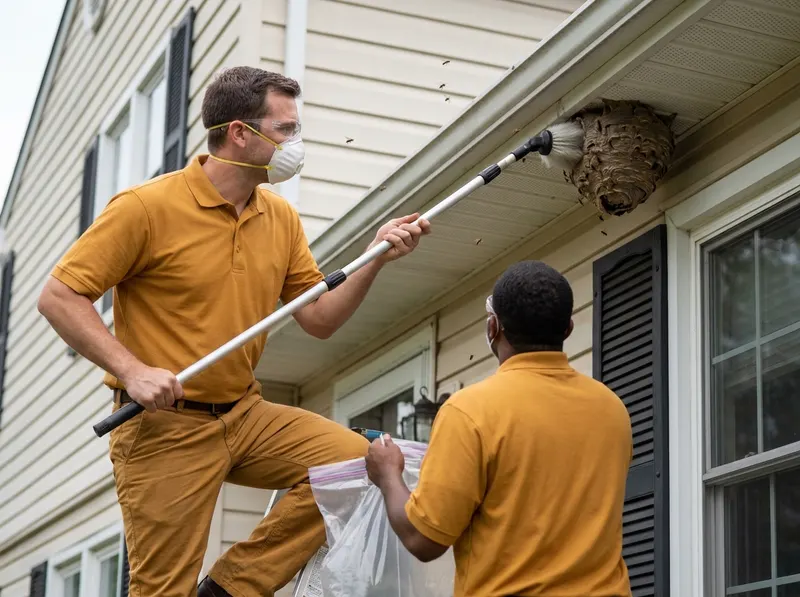
Yellowjacket and wasp calls peak August through October, and demand is heaviest the week after Labor Day when nests are at maximum size and defensive. Paper wasp nests hang open-celled under eaves, soffits, porch ceilings and grill covers; yellowjackets nest in the ground, in a wall void, behind vinyl siding, or in a soffit return where you only see traffic at one small hole. Ground and void nests are treated at the access point and, once activity stops, the entry is closed so a new queen does not reuse it. Same-week and often same-day scheduling is realistic for a nest by a door, a kid's swing set or an HVAC unit you need to service.
View details →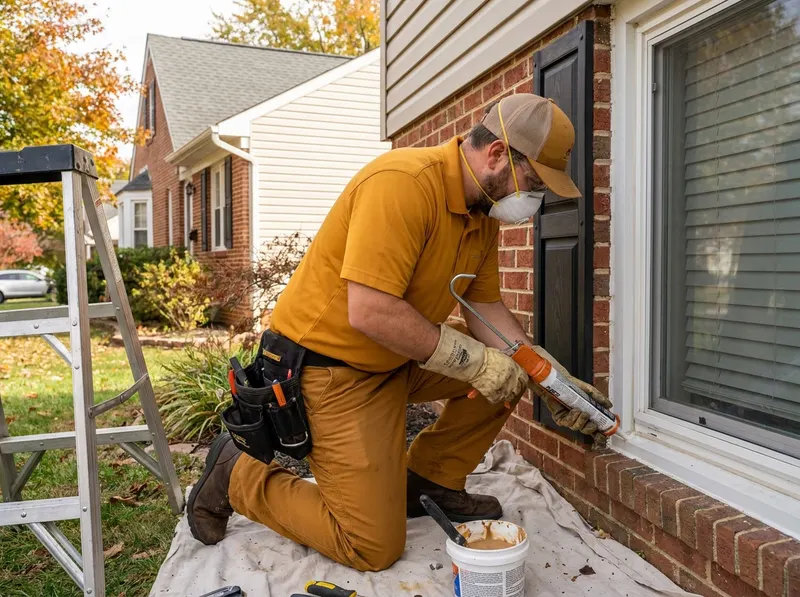
Brown marmorated stink bugs, boxelder bugs and cluster flies push into Glen Burnie houses September through November, gathering on warm south and west walls and slipping in around window frames, attic vents, chimney flashing and behind siding. This is exclusion work more than spray work: screening gable and ridge vents, sealing window and door frames, replacing failed weatherstripping, and treating the exterior envelope before the first cold snap rather than after they are already in a bedroom ceiling light. Once they are inside a wall void, vacuuming is the honest answer — insecticide in a wall cavity leaves dead insects that feed carpet beetles. Booking the exterior work in early fall, before temperatures drop, avoids the busiest stretch of the season.
View details →Pest control service in Glen Burnie is the inspection, pest identification, targeted treatment and physical exclusion work that removes insects and rodents from a house, rental or small commercial property in Anne Arundel County and seals the entry points that let them in.
You get a firm, itemized quote for your pest control service before any work begins — no surprises, no pressure.
Careful prep, tidy work, and a full cleanup when we are done. We treat your home and belongings like our own.
The same trusted, background-checked team from the first call to the final check.
The choice that matters most is one-time treatment versus a recurring program, and the honest answer depends on whether the pest lives inside your walls or wanders in from outside. If you found a single mouse in an attached garage in October, or one wasp nest under a Ferndale porch eave, choose a one-time visit — the pest is a seasonal visitor and once the nest is removed or the gap under the garage door is sealed, there is nothing left to treat. If you have German cockroaches in a kitchen, or mice with active droppings in a pantry and behind an oven, choose a treated sequence of two to three visits about two weeks apart, because both pests reproduce on a cycle that a single application will not outlast. The trade-off is money against certainty: one visit costs less and can absolutely solve a visitor problem, but on a breeding population it usually buys you three quiet weeks and then the same phone call. For termites the decision is liquid soil treatment versus an in-ground bait system. A liquid termiticide trench and treat around the foundation gives you a continuous treated zone quickly and suits a Glen Burnie rancher on a slab with accessible perimeter soil; a bait system suits homes where concrete patios, additions, tight side yards or a finished basement wall make full trenching impractical, and it monitors the property over time. The trade-off is speed versus disruption — liquid acts on the existing foraging population sooner, baiting takes longer to work through the colony but does not require drilling through a patio or walkway. For mosquitoes, a single event treatment before a graduation party is a different purchase than an April-scheduled seasonal program covering May through September. The event spray knocks down the adults resting in shaded shrubs for roughly two to three weeks; the seasonal program returns on a cycle and includes finding the water that produces them — a clogged gutter, a tarp fold, a birdbath, a corrugated drain pipe holding a half inch. Near Marley Creek and Sawmill Creek the breeding source matters more than the spray, so the program wins on results while the one-time visit wins on price. For rodents the real fork is trapping versus exclusion, and exclusion is the only one that ends it. Trapping removes the animals in the building now; exclusion — sealing weep holes, dryer vents, garage door corners, sill plate gaps and utility penetrations with steel and sealant — removes the reason more arrive in November. If you rent, or you are selling in sixty days, trapping alone is defensible. If you intend to stay in the house, pay for the sealing work once and stop paying for trapping every autumn.
Every project gets a firm, written price after a free on-site visit. Ranges below for orientation.
Tell us about your pest control service job and we'll send a clear, written quote — usually the same day. Or just call and talk to a real Glen Burnie pro.
(667) 405-1493
Glen Burnie's pest pressure is a housing-stock story. Much of the town is post-war ranchers and split-levels on slabs or shallow crawlspaces — Harundale, Ferndale and older Furnace Branch blocks especially — sitting on soil that stays damp because the Patapsco and Chesapeake water table is close and the yards were graded flat. That combination is ideal for Eastern subterranean termites, which is why swarm calls concentrate here from March through May, and it is why camel crickets and springtails show up in basements every wet spring in Freetown and Solley. Closer to the water in Marley Neck and Point Pleasant, and along the low ground near Marley Creek and Sawmill Creek Park, the same flat grading holds mosquito-breeding water in tarps, gutters and drain extensions all summer. Rental density around Glen Burnie Town Center, the Ritchie Highway corridor and near UM Baltimore Washington Medical Center means German cockroaches travel through shared walls and plumbing chases, so treating one kitchen without checking the adjoining unit rarely holds. Autumn flips the whole pattern: mice and brown marmorated stink bugs move to the warm walls of Tanyard Springs and Cromwell homes in October, and by the first hard freeze the phone is about entry points, not sprays. Sealing before the cold snap is cheaper than trapping through the winter, and it is the single piece of advice we repeat most across Anne Arundel County.
Free estimates for Glen Burnie & the surrounding area.
 Zorvex Pest Solutions