The first job is telling termites from ants, because the two swarm in the same Glen Burnie yards within weeks of each other and the treatment is nothing alike. A subterranean termite swarmer has a broad, straight-sided…
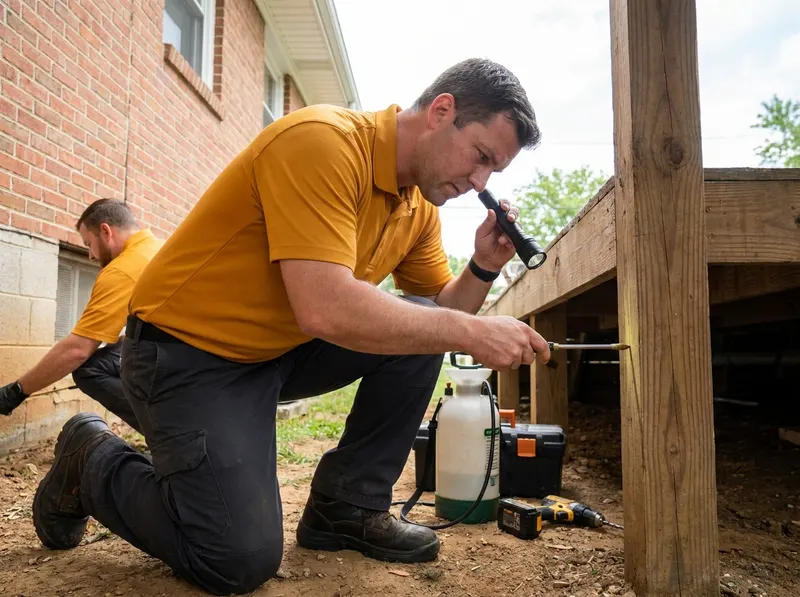
The first job is telling termites from ants, because the two swarm in the same Glen Burnie yards within weeks of each other and the treatment is nothing alike. A subterranean termite swarmer has a broad, straight-sided waist, straight beaded antennae, and four milky wings of equal length that snap off easily — which is why homeowners in Harundale and Ferndale often find a pile of loose wings on a windowsill or in a basement window well and never see the insect itself. A winged ant has a pinched waist, elbowed antennae, and a front wing pair noticeably longer than the rear. Wings on the sill plus a mud tube on the block wall is an active colony. Wings alone, with no tubes, no mud-packed joints, and no soft wood, often means a colony swarmed from a stump, buried timber, or mulch bed outside — and in that case the honest answer is monitoring and moisture correction, not a treatment contract.
Glen Burnie's housing stock creates specific entry points. Post-war slab-on-grade ranchers around Furnace Branch and Sunset Knoll give termites a hidden path up through expansion joints and bath trap openings where nothing is visible until paint blisters on a baseboard. Crawlspace homes toward Marley Neck, Solley and Point Pleasant sit closer to the water table, and the damp subfloor air keeps sill plates and band joists at the moisture level termites prefer. Landscape timbers and old railroad ties stacked against siding, mulch mounded above the siding line, firewood on soil beside a shed, and downspouts dumping at the corner of the foundation are the four conditions we find most often — and all four are free for a homeowner to fix before anyone sprays anything.
When a treatment is warranted, the choice comes down to access. A liquid soil barrier — trenching around the footing, drilling and injecting through slab, patio and garage concrete — puts a continuous treated zone between the soil colony and the structure and works fast on confirmed active infestations. The trade-off is disruption: trenching cuts through plantings and concrete cores stay visible. An in-ground bait system installs quietly in the soil ring around the house with no trenching or drilling, and suits homes with wraparound patios, mature plantings, or wells and irrigation lines close to the foundation. Baits eliminate the colony over weeks to months rather than hours, and they require scheduled monitoring visits, so they fit slower-moving situations better than a house full of swarmers in May. Localized spot treatment of a single deck post, garage bottom plate or joist bay is legitimate when activity is genuinely confined and the moisture cause is corrected — and dishonest when tubes are running the length of the foundation.
Home sales bring the other common request. Lenders, title companies and buyers' agents around Glen Burnie Town Center and Cromwell routinely ask for a written wood-destroying insect report before settlement, and that report is a findings document — it states what was visible and accessible on the day of inspection, including prior treatment evidence and old damage. We inspect first, write what we saw, and tell you plainly if the wood damage flagged by a home inspector is old, inactive, or something other than termites. Diagnosed first, treated once, sealed shut.
Every job gets a firm, written price after a free on-site visit.
Tell us about your termite inspection and treatment job in Glen Burnie and we'll send a clear, written quote — usually the same day.
 Zorvex Pest Solutions