The single biggest variable in a Glen Burnie yard is water you have not noticed. **Asian tiger mosquitoes breed in containers holding as little as a bottle-cap of water and rarely travel more than about 150–200 yards…
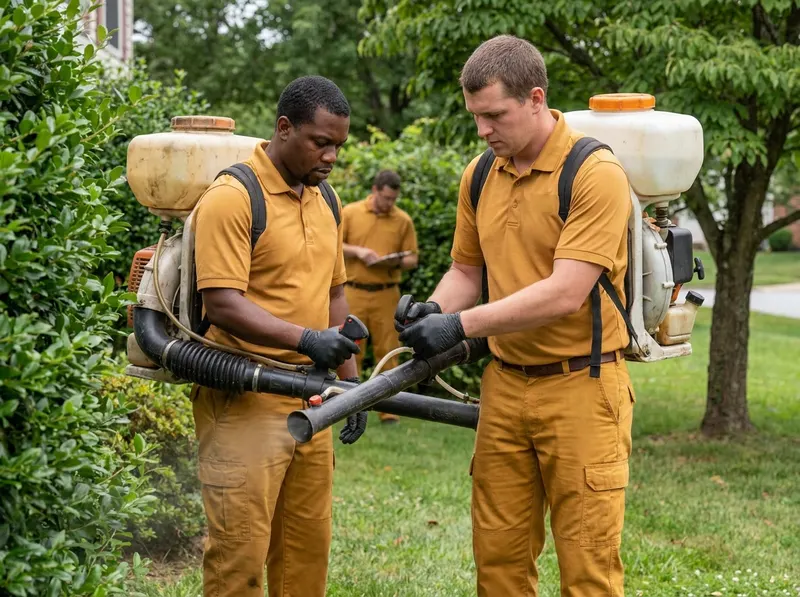
The single biggest variable in a Glen Burnie yard is water you have not noticed. Asian tiger mosquitoes breed in containers holding as little as a bottle-cap of water and rarely travel more than about 150–200 yards from where they hatch, which means the biting swarm on your deck in Harundale or Sunset Knoll is almost always homegrown: a folded pool cover, a clogged gutter run, the ribbed black downspout extension buried at the corner of the foundation, a forgotten wheelbarrow, the saucer under a potted fig. We count those on the first walk and hand you the list. Dumping them weekly costs nothing and does more than any spray. That is the part a fogging-only company has no reason to tell you.
Ticks work differently and need a different target. Blacklegged and lone star ticks do not live in mowed turf — they wait in leaf litter, ivy, and the shaded first ten feet inside a wood line, which is why properties backing onto the greenway near Sawmill Creek Park, the tree belt along Furnace Branch, or the wooded stretches near the northern trailhead of the Baltimore & Annapolis Trail see bites on dogs and kids who never left the yard. Tick work on those lots is edge work: treat the transition zone and the litter layer, pull leaf piles back off the fence, get the woodpile up off the soil, and keep a mulch or gravel break between the mowed lawn and the brush. Deer moving through the older large-canopy lots off Crain Highway keep restocking the population, so this is maintenance, not eradication — anyone promising a tick-free yard in Anne Arundel County is selling you something.
A seasonal program fits when you actually use the outdoors between May and September: cookouts, a fenced dog run, small kids, a pool, or shaded low-lying ground in Marley Neck, Point Pleasant or Solley where tidal-adjacent soil stays wet after rain and the mosquito season starts early. A single treatment fits a graduation party, a wedding in the backyard, or a one-weekend problem — it knocks pressure down for roughly a couple of weeks and then normal service resumes as adults fly back in. The honest trade-off: repeat visits cost more over a summer, and they are the only thing that keeps up with a 10-to-14-day mosquito life cycle.
Sometimes the answer is that you do not need a program. If the water producing your mosquitoes is a neighbor's untended pool, a county stormwater pond in Tanyard Springs, or a roadside ditch beyond your property line, no treatment stops insects breeding in water we cannot legally reach — and we will tell you that on the walk instead of billing you monthly for it. Applications are made to foliage, shrub undersides and structural resting sites rather than broadcast across open lawn; we keep product off blooming plants where pollinators are working, skip vegetable beds on request, and ask that children and pets stay off treated foliage until it dries. Diagnosed first, treated where it breeds, and the free fixes named out loud.
Every job gets a firm, written price after a free on-site visit.
Tell us about your mosquito and tick program job in Glen Burnie and we'll send a clear, written quote — usually the same day.
 Zorvex Pest Solutions