Nest location decides everything about this job. A paper wasp nest is an open, gray, upside-down umbrella with visible cells, usually tucked under an eave, a porch ceiling, a deck rail, or inside a patio umbrella — a…
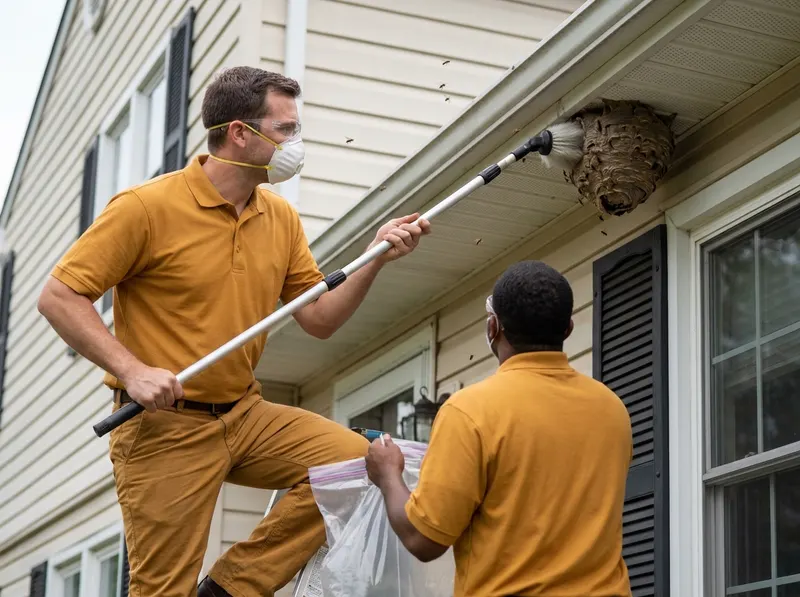
Nest location decides everything about this job. A paper wasp nest is an open, gray, upside-down umbrella with visible cells, usually tucked under an eave, a porch ceiling, a deck rail, or inside a patio umbrella — a colony of a dozen to maybe forty insects with mild temperament unless you crowd it. A yellowjacket nest is hidden: a hole in the lawn under mulch, a gap where the vinyl J-channel meets the soffit, a crack in a brick veneer, or an old rodent burrow beside a shed slab. Yellowjacket colonies can hold thousands of workers by September and defend the entrance aggressively. Bald-faced hornets build the football-shaped paper nest people photograph in trees and on gable ends. Identifying which of the three you have determines whether this is a five-minute knockdown or a wall-void job.
Here is the honest decision-fit. If you have a single paper wasp nest under a deck rail in November and the weather has been cold, you probably need nothing at all — the colony is done, and paper wasps do not reuse last year's nest. A nest over a doorway in July, on a house with kids running in and out, is worth treating now. A yellowjacket colony inside a wall or soffit void is the one case where DIY reliably makes things worse: homeowners in Harundale and Ferndale ranchers foam or caulk the outside entrance, the colony chews toward the interior looking for a new exit, and yellowjackets come out at the ceiling fixture in the bedroom. Never seal a void the insects are still using. Treat first, confirm no traffic for a few days, then seal.
Late summer is when Anne Arundel County phones ring for this. Yellowjacket colonies peak from August into October, and by then foragers switch from insect protein to sugar — which is why they show up at the trash cans, the soda cans on the deck, and the crabs on the picnic table. Properties backing to woods and creek edges — Marley Neck, Solley, the parcels near Sawmill Creek Park and along the northern end of the Baltimore & Annapolis Trail — get more ground-nesting pressure because there is more undisturbed leaf litter and more rodent burrow real estate. Older sheds and detached garages in Furnace Branch, Freetown, and Point Pleasant tend to hold nests in the rafters and under the floor lip. Newer builds in Tanyard Springs and Cromwell see nests in the mulch beds, behind shutters, and inside the little weep gaps at the top of vinyl siding runs.
For safety around a toddler, a dog, or a vegetable bed: ground and void nests are treated with a labeled dust placed directly into the nest entrance, not broadcast across the yard, which keeps the material where the insects are and off the lawn and garden. We tell you how long to keep pets and kids off the treated area before we leave. Free things you can do yourself, no service needed: latch trash and recycling lids, rinse sugary cans before they go in the bin, keep drinks covered on the deck in September, and each winter — after nests are dead — seal soffit return gaps, missing siding J-channel caps, and vent screens so next spring's queens have fewer places to start. Fixing those gaps is usually more valuable than the spray.
Every job gets a firm, written price after a free on-site visit.
Tell us about your wasp and yellowjacket nest removal job in Glen Burnie and we'll send a clear, written quote — usually the same day.
 Zorvex Pest Solutions